
Your guide to egg freezing
Egg freezing can help you preserve your fertility, giving you more flexibility over when you start a family. This guide explains how the process works, who it may benefit and how to decide if it’s right for you.
In this guide:
If you’re not ready to start a family yet or need to preserve your fertility for medical reasons, egg freezing may help you keep your options open.
In this guide, we will cover:
- What is egg freezing and what it involves
- How the process works
- Understanding egg freezing success rates
What is egg freezing?
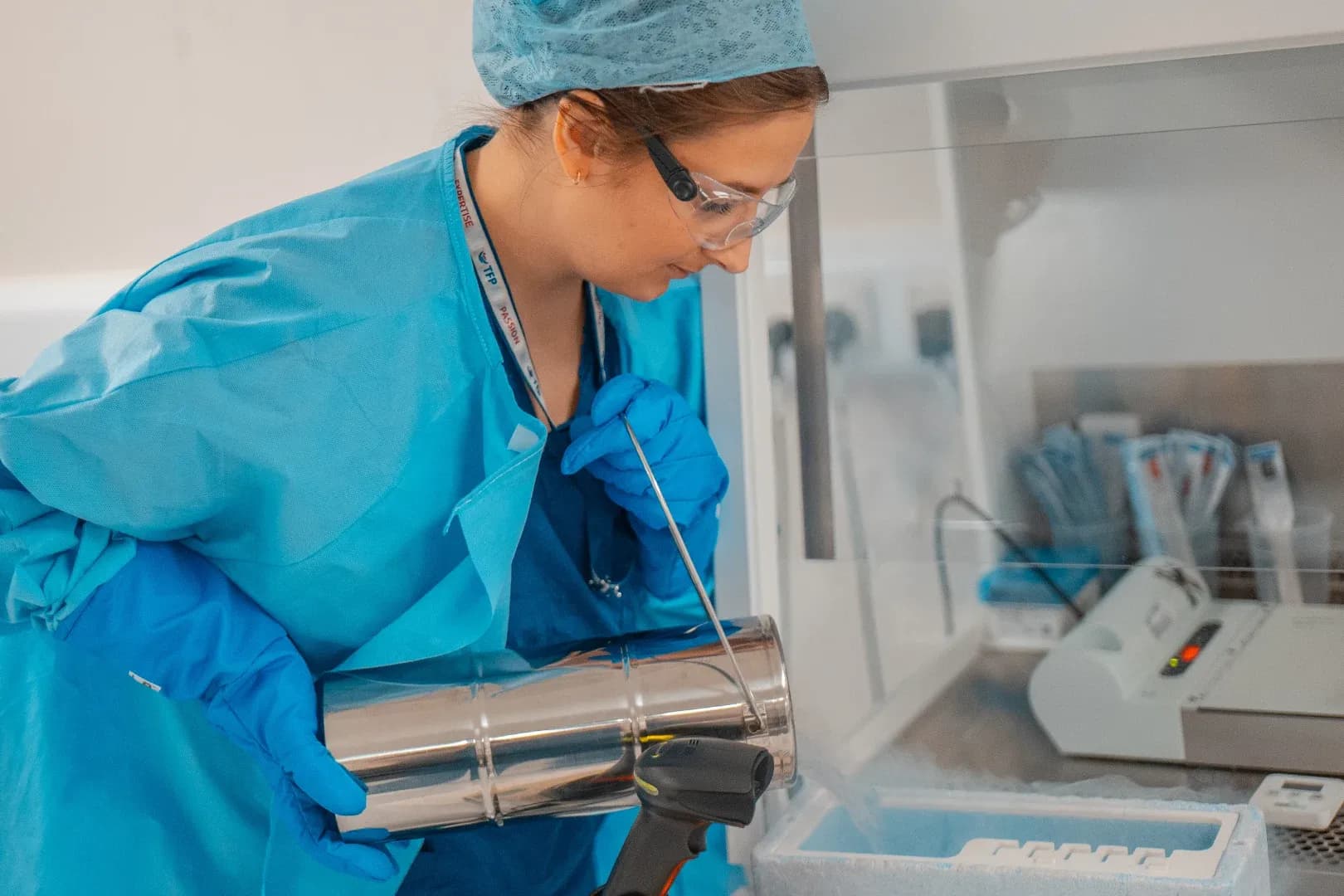
Egg freezing is a way to preserve your fertility for the future, giving you the option to try for a family when the time feels right for you. You’ll have a IVF cycle tailored to you. This includes a course of hormone medication to stimulate your ovaries to develop follicles, followed by a short procedure to collect your eggs. These mature eggs are then rapidly frozen using a technique called vitrification and stored safely for future use.

Who can benefit from egg freezing?

You want more time to decide

You're considering gender-affirming treatment

You have a medical condition

Your role carries a risk of injury
How much does egg freezing cost?
You'll find a breakdown of a typical egg freezing cycle below, as well as the cost of a fertility assessment to help provide you with the answers you need to plan for your future.
*Any medication required throughout your treatment is charged separately. **All prices are subject to regional variation.

Fertility assessment
£485
Includes consultation
Egg freezing cycle
£3,845
Includes egg retrieval and freezing
Storage
£389
Paid annually
Egg freezing with egg sharing
£1,000
For those egg sharing, you'll receive a reduction in the cost of treatment. This includes egg collection and freezing.
Understanding egg freezing success rates
It’s natural to want to understand your chances of having a child using frozen eggs in the future. Around 85% of eggs are estimated to survive the freeze-thaw process, although this can vary. Survival is only one stage of treatment, and not every egg will result in a pregnancy.
Your chances depend on several factors, including your age, when your eggs are frozen, the number of mature eggs collected and their quality. During your consultation, our fertility specialist will talk you through success rates and what this could mean for you, so you can a decision that’s right for you.

What happens when you want to use your eggs?
Your eggs stay stored until you’re ready to use them. When the time comes, you’ll contact your TFP clinic, and we’ll arrange scans, a consultation and a treatment planning appointment.
Your eggs are then thawed and fertilised in the lab using ICSI. The embryos develop for five to six days until they reach the blastocyst stage, and we transfer the strongest to your womb. You can take a pregnancy test 12 to 15 days after the transfer, and we’ll take you through the next steps whatever the result.

Egg freezing FAQs
Start your fertility journey

Dr James Hopkisson
Medical Director, TFP Nurture Fertility · Reviewed 28 October 2026
Demonstrated Experience
- ·Over 30 years of dedicated experience in fertility and IVF.
- ·Laparoscopic surgeon who specialises in correcting pelvic adhesions, uterine fibroids, and advanced endometriosis to enhance natural and assisted conception.
- ·Lead for subspecialty training in reproductive medicine in Nottingham, responsible for training the next generation of specialist doctors in fertility.



Ready to start your fertility journey? We're here for you
Speak to our patient support team for advice about your options and to book your first consultation with a fertility expert.